NFL teams make trades every year in the hopes of building a Super Bowl roster or building for the future, but sometimes trades can seriously backfire and even massively change the landscape of the NFL. So here are the 15 worst trades in NFL history:
Texans trade DeAndre Hopkins to the Cardinals:

Former Texans’ GM Bill O’Brien always had a tendency to trade away players with whom he had minor disagreements. Thus, when the team’s No. 1 wideout, DeAndre Hopkins, asked for a raise, and O’Brien didn’t like that Hopkins wasn’t practicing every day, Hopkins’ days in Houston were numbered.
Trading away Hopkins to Arizona for David Johnson and 2nd and 4th round picks during the 2020 offseason was the last straw for the Texans, who fired O’Brien after an 0-4 start to the 2020 season. The team finished the year with a 4-12 record, and David Johnson, the running back they had given a king’s ransom for, ran for just 919 yards and 6 touchdowns in two seasons with the Texans.
Vikings trade for Herschel Walker:

During the 1989 season, the Vikings traded their entire franchise’s future for one player, although the Cowboys’ running back, Herschel Walker, was a generational talent. The Cowboys used their whopping eight draft picks from the trade, including three first-rounders, to acquire franchise cornerstones such as Emmitt Smith, Darren Woodson, and Kevin Smith.
The Vikings were supposed to win a Super Bowl with Walker; instead, Dallas won three Super Bowls in the next seven years thanks to that trade. Despite the trade being heavily scrutinized toward the Cowboys, Walker’s career had already peaked with the Cowboys, and Minnesota never made it past the divisional round during their nine seasons with Walker.
The Browns trade for Deshaun Watson:

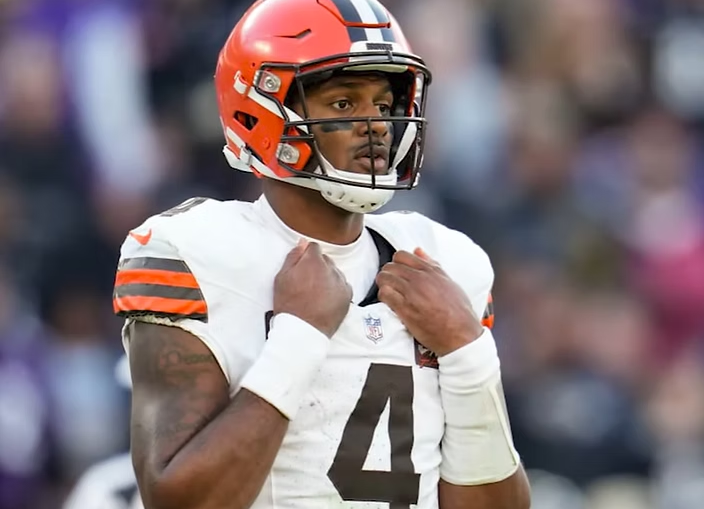
One of the reasons why the Texans were able to recover from the DeAndre Hopkins trade so quickly, rather than it taking much longer, was that they fleeced the Browns in an even more lopsided trade. The Browns had recently gotten their first playoff win in 26 years and had one of the NFL’s better rosters, but they traded the future of the franchise for a quarterback who hadn’t played an NFL snap in nearly two years due to legal troubles.
Cleveland gave up six draft picks to Houston, including three first-rounders, which the Texans used to acquire some notable playmakers such as DE Will Anderson Jr., WR Tank Dell, DB Kamari Lassiter, and WR Stefon Diggs. Meanwhile, when the Browns finally had their three-time Pro Bowl quarterback activated, he looked like a shell of his former self. Watson has only played 19 games in four seasons with the Browns, but his average of 177 yards per game suggests that the team is often better off without Watson on the field. To make matters worse for Cleveland, they wasted $250 million in guaranteed money on Watson, which they will continue to pay until 2028.
The Saints trade their entire draft for Ricky Williams:

Heading into the 1995 draft, running back prospect out of Texas, Ricky Williams, was viewed as a generational talent. Williams won the Heisman in 1998 with a jaw-dropping 2,327 rushing yards, 29 touchdowns, and 6 yards per carry. The Saints figured that they couldn’t get him with the 12th overall pick, so they traded every single one of their picks in the 1999 draft to the Commanders, and a 2000 first and third rounder, for Ricky Williams.
Williams averaged just 3.5 yards per carry and scored two touchdowns in year one, and the Saints had very little draft capital or young talent to build a winning team, resulting in a 3-13 season. Things got slightly better for the Saints following a disastrous 1999 season, but Williams couldn’t single-handedly carry a team that traded their entire draft for him. Williams did lead the NFL in rushing yards in 2002, but that was after the Saints traded him away to Miami.
Falcons trade Brett Favre to Green Bay:
The Falcons were such a dysfunctional organization in 1991 that the front office drafted a quarterback that head coach Jerry Glanville famously said it would take a plane crash for that QB to play for him. Glanville was only proved right when Brett Favre’s first career pass was a pick-six in a week 11 game against Washington. Favre threw just four pass attempts in Atlanta, two of which were interceptions, before the Packers offered the Falcons a first-round pick for Favre.
Atlanta spent their first rounder on running back Tony Smith, who started just six NFL games. Meanwhile, Favre started an NFL-record 253 consecutive games for the Packers, winning three MVPs, one Super Bowl, and earning nine Pro Bowl appearances. However, despite Favre’s success in Green Bay, it’s very unlikely he would have succeeded on a Falcons team with a head coach who needed a plane crash to have Favre play for him.


The Oilers trade away Steve Largent:
After the Oilers drafted wide receiver Steve Largent in the fourth round of the 1976 draft, Houston planned on releasing Largent, but instead traded him to Seattle for an 8th round pick. The player the Oilers traded away for an 8th round pick became an eventual Hall of Famer, with Largent playing 14 seasons with the Seahawks, and recording 1,000+ yards in eight of them. Largent is easily the Seahawks’ most prolific receiver of all time, and the Oilers could have used such receiving talent during their many playoff exits following the trade. If the Oilers had merely released Largent, it would have still been a monumental mistake, but no one would know the mistake they had made.
Randy Moss to the Patriots:

Trading for Randy Moss hurt the Raiders, as they gave up linebacker Napoleon Harris and a 7th overall pick for a rather unproductive receiver, but trading away Moss was even more lopsided against Oakland. After a disappointing three-year stint with the Raiders, where Moss averaged just 775 yards per season, his critics declared him washed up. However, a move to the Patriots in 2007 revived his career, where Moss led the NFL in touchdowns, earned first-team All-Pro honors, and led the Pats to a 16-0 regular season. Moss topped 1,000 receiving yards in the following two seasons as well, and all the Raiders got from trading him was a measly fourth-round pick, which they spent on CB John Bowie, who never started an NFL game.
The Buccaneers give Steve Young to the 49ers:

After leaving the USFL to play for the Bucs in 1985, Steve Young struggled mightily during his two seasons in Tampa. Young threw 11 touchdowns to 21 interceptions in 19 starts for the Bucs. Young only won three of those 19 starts, thus the Bucs moved on from Young in exchange for a second and fourth-round pick.
Young was expected to be a career backup, but thrived in San Francisco with much-improved offensive weapons and coaching. Once Young became the full-time starter, he won a Super Bowl, two MVPs, and was one of the NFL’s top-three quarterbacks from 1992-1997. And not only did the Bucs give up a generational talent, but the two players they drafted from that trade, Winston Moss and Bruce Hill, never made the Pro Bowl once in their entire careers.
Chargers trade for Ryan Leaf:

Holding the 3rd overall pick on draft day of 1998, the Chargers could have taken Hall of Fame cornerback Charles Woodson, who ended up going 4th overall to the Raiders. Instead, San Diego traded a first and second round pick to Arizona to move up one spot in the draft order to select quarterback Ryan Leaf.
Leaf, despite declaring that he would win a Super Bowl and have a 15-year career, played just 21 games in the NFL. Leaf missed plenty of time due to injury, but was atrocious when he did play, recording 2 touchdowns to 15 interceptions in 1998. Leaf finished his 21-game career with a 4-17 record and a 48.4 completion percentage, and the Chargers had essentially thrown away two high draft picks.
The Colts trade for Trent Richardson:

Trent Richardson was the first running back selected in the 2012 draft, whom the Browns questionably traded up to select. Richardson recorded a respectable 950 yards in year one in Cleveland, but fumbled three times, and his 3.6 yards per carry made him the league’s most inefficient RB.
The Colts, however, ignored the red flags with Richardson, giving up a 2014 first-round pick for him. Richardson was much worse in Indianapolis than in Cleveland, and playing behind one of the league’s worst O-lines didn’t help either. Richardson played just 20 games for the Colts, rushing for just 3.3 yards per carry and 3 touchdowns. If it makes the Colts feel any better, the Browns wasted their first-round pick they received on Johnny Manziel.
Rams trade Jerome Bettis to the Steelers:

Hall of Fame running back Jerome Bettis is known for playing for the Steelers, but he was actually drafted into the NFL by the Rams in 1993. Bettis ran for 1,429 rushing yards in his rookie season and a league-leading 4.9 yards per carry. However, a move to St. Louis, along with changes in coaching and offensive playcalling, led to a significant drop-off in production from Bettis.
The Rams forced Bettis to adapt to their new offensive scheme, but Bettis, fed up with the team, left Saint Louis for Pittsburgh in exchange for a second and fourth round pick. Bettis showed the Rams why they made a massive mistake, rushing for 1,000+ yards in six consecutive seasons with the Steelers, winning a Super Bowl, and was inducted into the Hall of Fame.


The Packers trade for John Hadl:
Midway through the 1974 season, the Packers questionably traded for a 34-year-old quarterback, John Hadl, for two first-round picks, two second-round picks, and a third-round pick. What was even more questionable was Hadl’s last game with the Rams before getting traded, which he played against the Packers. Hadl threw for 59 yards, 6/16, 0 TDs, and two INTs, so Green Bay should have been well aware of Hadl’s decline. Instead, the Packers gave up a massive draft haul for an aging Hadl who threw 9 TDs to 29 INTs in a year and a half in Green Bay.
Russell Wilson traded to the Broncos:

Russell Wilson was a yearly MVP candidate during his time in Seattle, but the Seahawks shipped him to Denver during the 2022 offseason due to Wilson’s frustration with the organization. The Broncos, who already had an elite defense and plenty of offensive weapons, were a preseason Super Bowl contender after trading for one of the NFL’s best QBs. The Broncos had such a dominant defense during the 2022 season that, with merely an average offense with their 9-time Pro Bowl quarterback, they would easily finish the season with a winning record.
Instead, the Broncos’ offense finished dead last in points per game (16.9), Wilson hit career lows in touchdowns, completion percentage, and sacks, and the team only won 5 games thanks to rookie Head Coach Nathaniel Hackett’s awful game management. The Seahawks used their five draft picks from the trade to acquire a slough of defensive players, including Devon Witherspoon and Boye Mafe, which has helped Seattle’s defense rank top ten in the NFL.
The 49ers trade for Trey Lance:
The 49ers were a franchise QB away from a Super Bowl in 2021, and while Mac Jones was likely their original target in the 2021 draft, they got a little too carried away in the Trey Lance hype. San Francisco gave up two first-round picks for a quarterback who started just one season in college and only 4 games for the 49ers.
Lance completed 48.8% of passes in two games in 2022 before he suffered a season-ending ACL tear. After Brock Purdy’s breakout season, the 49ers shipped Lance to Dallas to become a career backup. The 49ers would come within a play of winning Super Bowl LVIII a couple of years later, thus some key playmakers from those two first rounders they could have used might have made the difference in a 25-22 overtime loss.
The Bears trade for Mitch Trubisky:
For what will go down as one of the worst draft-day trades in NFL history, the Bears gave away their 3rd round and fourth-round picks, and a 2018 third-round pick to move up one spot in the 2017 draft order.
Chicago was dead set on quarterback Mitch Trubisky out of UNC, but maybe a little too dead set on Trubisky, as they took him over Patrick Mahomes and Deshaun Watson, who became franchise quarterbacks and All-Pro talents. Trubisky, however, did not pan out to be the Bears’ franchise QB. The Bears had an elite defense, making a generational talent like Mahomes or Watson possible enough to reach a Super Bowl, but Chicago instead got just one playoff appearance from Trubisky’s mediocre quarterback play.


Leave a Reply